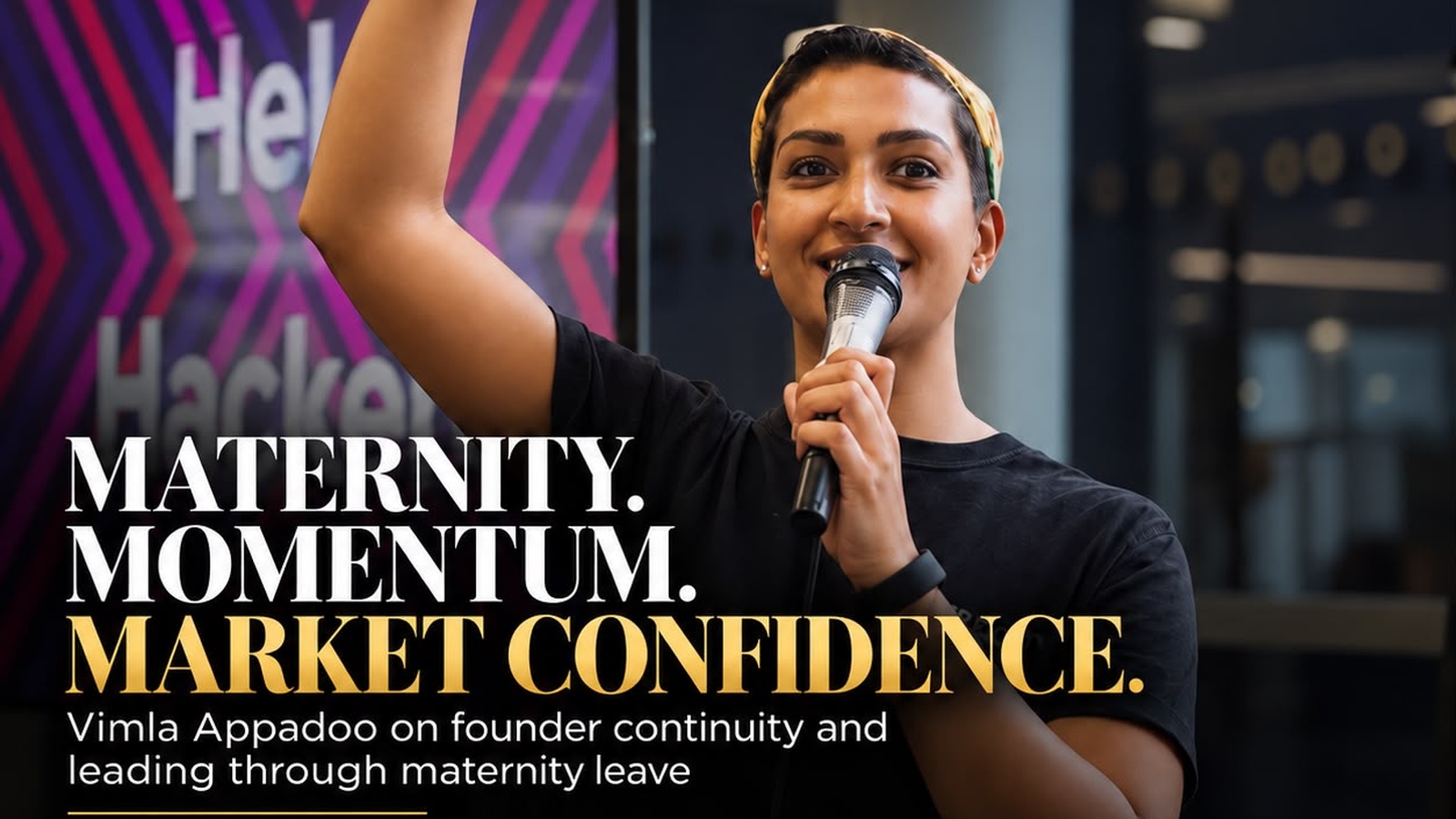
Vimla Appadoo, Co-Founder and CEO of Honey Badger, shares her experience of navigating maternity as a founder, building a business that can operate beyond its founder, and redefining what sustainable leadership looks like.She reflects on the importance of trust, delegation and creating a working culture where ambition and life can coexist.
Can you briefly introduce yourself and the business you founded?
I am Vimla Appadoo, the Co-Founder and CEO at Honey Badger. Over and above everything, I am passionate about embedding fearless change across organizations, to design safe workplaces where everyone can thrive and that leaves a positive impact on society.
I am a design thinker, international speaker and advocate for changing the way businesses think: using technology, design and culture to align profit and purpose.
I travel the world representing the UK on tech missions and have been featured in The Times on Sunday, BBC Breakfast and Sky News. I am a multiple award winner, with a spot on the Northern Power Women Awards Future List, Digital Leaders Young Leader of the Year, WeAreTheCity Rising Star and on the Top 100 Asians in UK Tech list. I am on the board for the Greater Manchester Local Enterprise Partnership and have previously been a Trustee for DiversityUK.
Following my most recent maternity leave, I founded Making Matrescence Work, a return to work programme to support new mothers in understanding their new identity, skills and place in the workplace.
What have been the biggest milestones in your founder journey so far?
There are two big milestones for me, the first is taking the leap to run Honey Badger with 100% of my time. Up until 2022, I was running Honey Badger part time, whilst juggling a job and saw Honey Badger as my passion project. Now it's my all and it's amazing to be in control of my own time, projects and workload.
The second, was having the opportunity to take my mum to an awards ceremony where I won a Rising Star award. It was a pivtol moment for me, to celebrate my mum's influence and support in shaping my achievements and work ethic - plus we wore cultural clothes to represent our diversity. It was very special.
How much funding have you raised to date, and what has the fundraising journey taught you?
We haven't gone through any rounds of funding or grant applications. We've won work through word of mouth and our reputation and win contracts through our expertise and delivery.
At what point did maternity become a serious leadership and business planning consideration for you?
My first return to work experience was awful and taught me so much about how undervalued mothers are in the workplace. My second return to work experience was completely in my own hands as a self employed business owner. I took all of my learnings and knew I wanted to support other mothers in their journey, and I already had a network of high achieving parents who needed support getting back into work. I think the opportunity came about because I had the confidence to say out loud what is so often silenced and that became a really powerful tool to support others.
What did you put in place to ensure the business could continue operating while you stepped back?
I worked really hard to build a network of trusted individuals to help keep the business going and deliver work whilst I needed time off with my baby. It was as simple as knowing how and when to delegate and being able to work strategically rather than in delivery.
How did you manage confidence with investors, clients, partners and your team during that period?
I took the approach of being completely vulnerable, open and accepting of what I could offer and how I showed up. I turned up to meetings with my baby and made sure people knew where I was at. It was a complete game changer as it enabled collaborators and clients to open up about their journey and created the right working culture for me too.
What was the hardest part of stepping back as a founder, especially when the business was still growing or raising capital?
Trust - knowing that all the hard work I put in would not go to waste and would be there for when I was ready. I didn't step back completely and definitely kept my hand in the game, but knowing I wouldn't be actively growing the business was a necessary decision and one I knew I could come back to post leave.
What did maternity teach you about leadership, delegation and building a company that is not overly dependent on the founder?
It taught me so much - how to prioritize my time, how to get the crucial work done, to trust myself that I can deliver, to manage complex emotions, to speak confidently and succinctly and it gave me the hindsight and power to slow down.
How did you approach returning to the business after maternity leave?
Knowing where my strengths are and putting it into practice. Having designed the return to work programme, I was able to use my own methodologies to support my return to work so that I could effectively return knowing what I need, how I want to work and creating the right opportunities for me to do so.
What advice would you give to another female founder preparing for maternity while fundraising, scaling or managing key stakeholders?
If you are getting any sense of negativity for being present with your baby in any work setting as you're growing your business, then ask yourself if that's the right funder, client or stakeholder for you (if that's the culture you want). For me, knowing I want to run and work in a business that accepts that life happens is crucial and so it means being conscious of who I work with to enable that to happen.